Best notebook for hiking and backpacking: what to look for
The best notebook for hiking is one that ignores rain, does not tear when your pack is stuffed, and stays flexible when it is cold. That points to a sheet the water cannot soak into, because a page that absorbs water cockles, goes see-through, and tears at the fold exactly when you need it. Stone paper does that job, and so does coated paper. Below is where they differ, which pen you need, and which binding suits the way you walk.
What a hiking notebook actually faces
Rain is the obvious one, but it is rarely the thing that destroys a book on trail. The slow damage is quieter: sweat soaking through a hipbelt pocket, condensation inside the tent, a water bottle weeping in a side pocket, a river crossing that gets the pack wetter than planned. Any of those turns a wood-paper page soft and wavy. Then there is the mechanical life: a notebook crushed under a bear canister, a corner snagged on a zip, a page turned with cold, wet fingers. A hiking notebook has to survive weather and being packed by someone in a hurry.
The five things that matter on trail
- The sheet does not absorb water. A non-absorbent page, whether stone paper or coated paper, sheds rain and sweat and stays flat. This is the whole reason to buy one.
- It resists tearing. Wet ordinary paper rips at the fold. A fibre-free sheet stretches and resists instead, which matters in a crushed pack.
- It stays flexible in the cold. High and late-season trips are where cheap laminated pads go stiff and crack. A good sheet folds back and takes a note with cold hands.
- It writes with a pencil or the pen you carry. No hunting for a special pen at altitude. A pencil never runs and never freezes.
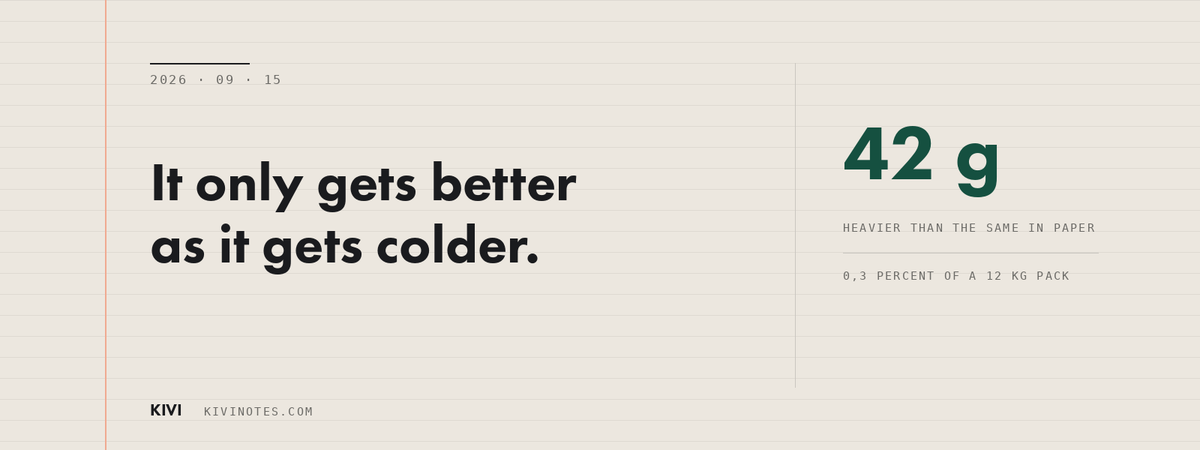
- It is the right size for your pack. A pocket book you actually carry beats a big one you leave at home. Weight barely comes into it: the sheets of a B6 in stone paper weigh about forty grams more than the same sheets in paper, which you will not feel on a twelve-kilo pack.
Pencil or pen at altitude
A pencil is the quiet hero of a hiking kit. Graphite ignores cold and wet entirely, never skips, and marks a slightly chalky surface darker than it would ordinary paper. A ballpoint is the next best thing and dries fast. Gel and fountain pens work on stone paper but dry slower, so a cold thumb can smudge a fresh line, and in a freezing wind a pencil simply never lets you down. Keep it simple: a short pencil weighs nothing and solves the pen problem entirely.
Why it gets better in the cold
This is the part that rarely gets written down. A sheet with no fibre holds no moisture, so there is nothing in it that can freeze. High and late in the season it stays flexible where damp wood-pulp paper goes stiff and tears at the fold, and a pencil bites darker on it than on ordinary paper, exactly when your hands are cold and you do not want to press hard. The days a notebook really earns its place are the cold wet ones, and that is precisely where this sheet is at its best.
Size and binding for a pack
A B6 or smaller fits a hipbelt or lid pocket and still gives a full line to write across. Binding is a real choice. A spiral lies flat for notes on one knee and lets you tear out pages to drop weight on a long trip, which is why thru-hikers like it. A sewn or glued book is slimmer, has no wire to snag mesh, and keeps every page together. Neither is wrong; it depends on whether you value shedding weight or keeping the whole log intact. The same logic runs through our guide to the best waterproof notebook for camping if your trips are more basecamp than thru-hike.
Common questions
What is the best notebook for hiking in the rain? One with a sheet that does not absorb water, so rain and sweat do not pulp the page. Stone paper and coated paper both qualify; ordinary "waterproof" journals on normal paper do not.
Is stone paper too heavy for backpacking? No. The difference against the same notebook in paper is about forty grams, less than half a percent of a normal pack.
Do I need a special pen? No. A pencil is ideal in cold and wet. A ballpoint works well too.
Which binding is best for a thru-hike? Spiral, because you can tear out used pages to drop weight. For a full trip log you want to keep, choose sewn or glued.
How does it compare to Rite in the Rain? Both shed water; they get there differently. We compare them in detail in stone paper vs Rite in the Rain.
The short version
The best notebook for hiking is one where the sheet refuses water, resists tearing, and stays flexible in the cold, so a pencil line survives rain, sweat and a crushed pack. Stone paper does that well, and it only gets better as the temperature drops. Buy for the non-absorbent sheet, put a pencil with it, and pick your binding by whether you shed pages or keep them.
Before your next trip, see how our B6 stone paper notebook handles a wet, cold day on the product page. No tree, no bleach, no process water, and here is what that does and does not mean in numbers.
KIVI B6, ruled, 80 pages, € 14.95. The waitlist gets 10% off.